
You treat a leaked cloud key as a near miss if you yank it before lunch. That instinct is how most cybersecurity programs still score credential incidents: time-to-delete, ticket closed, nobody used it. Malwarebytes just published the uncomfortable counter. A bot tested an AWS access key within eight seconds of public exposure. Your incident response clock starts after the internet has already taken a swing.
The same week handed you three more exhibits. An unclassified CIA system was breached, according to an AP source cited by SecurityWeek, with no public clarity on what left the building. Colorado warned that cybercriminals likely stole data from 150,000 myColorado users, the app residents use for digital identification, document storage, and state services. Dark Reading mapped a quieter failure in orbit: satellite risk concentrating in ground stations, the earthbound kits nobody budgets like spacecraft. You keep ranking these as lesser systems. Attackers keep cashing them.
Your Cybersecurity Playbook Still Thinks in Minutes
Eight seconds is not a rounding error. It is faster than your chat notification, faster than a human reading a gist URL, faster than the “I reverted the commit” reflex that still shows up in writeups as if revert were containment.
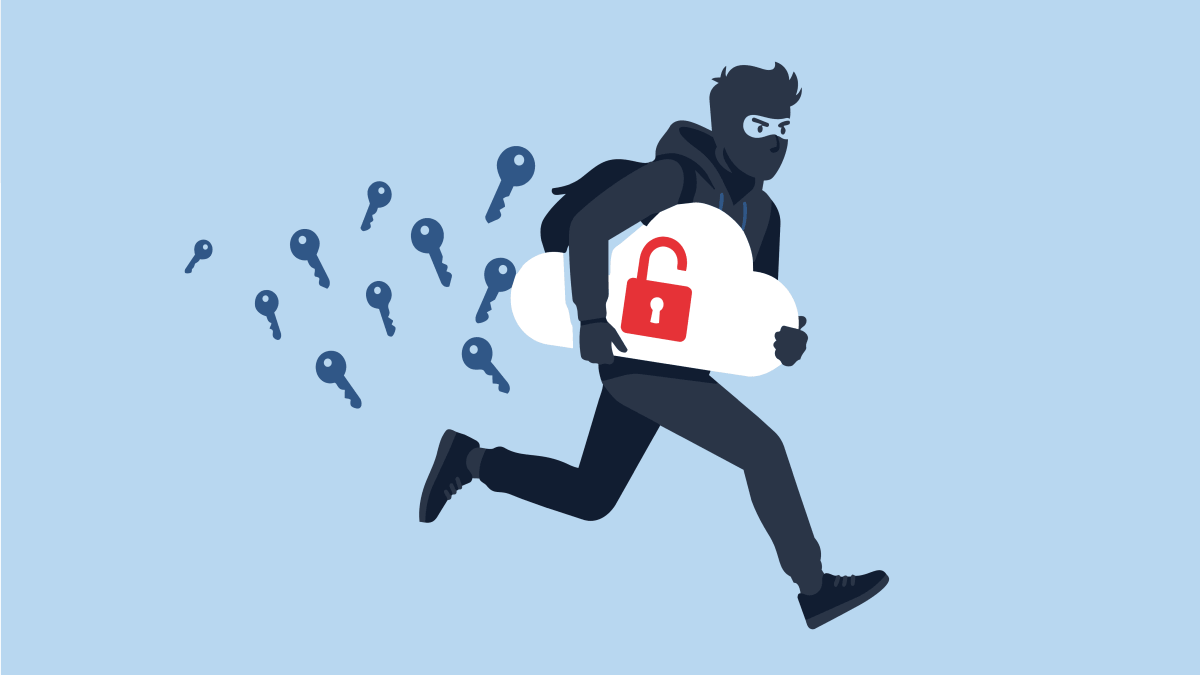
Public credential scraping is a commodity. Bots watch GitHub, paste sites, CI logs, and misconfigured buckets the way your threat detection watches failed logons. The difference is the valid key does not fail. It authenticates. Your firewall never sees a brute-force signature because nothing is being guessed. One quiet call to identify the principal, then a walk through object storage, IAM, and whatever that identity can touch. Threat-protection stacks tuned for noisy scanning will file this under “successful API call” if they file it at all.
Stop telling leadership the key probably sat unused because you deleted it in two minutes. Two minutes is a long residency in this market. If the secret was world-readable for any interval you can measure with a stopwatch, you run the full play: disable the key, rotate everything it could mint, pull control-plane logs from hours before the paste, and treat downstream tokens as stolen. Cyber security teams that still use exposure duration as a severity slider are grading their own homework.
The real problem here is cultural. You built runbooks around phishing tickets and weekend patch windows. Those are hour-scale and day-scale problems. A public cloud credential is a second-scale problem wearing a first-scale process. Until disable-and-rotate is an API you can fire from a phone, you will keep closing “near misses” that already paid out.
Unclassified Still Pays Like Production Data
Then there is the classification comfort blanket. Unclassified sounds like you can deprioritize the ticket. The CIA incident is still thin on public detail, which is its own operational lesson: you will often learn that a “low” system was hit before you learn what left. Unclassified boxes sit on the same identity providers, the same vendor remote-access stacks, and often the same on-call humans as the work you actually worry about. Attackers need a foothold nobody is watching at 2 a.m. because the handling label said low.

Colorado made the citizen version of that ranking error visible. myColorado is how people prove who they are to the state. Digital ID, stored documents, government services. One hundred and fifty thousand users. When that store moves, you are discussing impersonation, benefit fraud, and a multi-year reissuance problem. Calling the app a convenience layer does not shrink the blast radius. Convenience layers are where the identities live.
This is a bad look for any public-sector program that shipped digital ID ahead of an incident response retainer that can speak in hours, not press cycles. It is a worse look for private operators who mirror the same architecture: a “low sensitivity” portal that issues session tokens into everything else. If your asset inventory still has a column that says “not crown jewels, SLA can slip,” print the Colorado notice next to it. Citizen-facing identity is production identity. Unclassified collaboration is still a lateral-movement platform.
You already know this in the abstract. You prove it every time a vendor jump box becomes the incident. The news this week is that nation-state-adjacent targets and state citizen apps fail the same way your internal “low” apps fail: weak monitoring, shared credentials, and a belief that boring systems attract boring attackers.
Ground Stations Get Hit Before Orbit Does
Satellite operators love to talk about space. The consequential failure is on the ground. Dark Reading’s reporting is blunt: as the commercial space race accelerates, weaknesses in ground-based infrastructure become the ones that matter. Dishes, teleport facilities, vendor jump boxes, aging Windows hosts next to the modem rack, VPN concentrators that still accept passwords from the integrator who left in 2019. You cannot patch a spacecraft in an afternoon. You can spray credentials at a ground station that still thinks a firewall rule is a security program.

Defense in depth for SATCOM means treating the earth segment like a plant network, not like an office VLAN with a nicer antenna. Segment the control LAN. Require phishing-resistant MFA on every path that can slew a dish or push firmware. Inventory the integrator laptops. Log the outstation management plane as production. If your threat model starts at the satellite and works down, invert it. The RF link is rarely the cheapest way in.
The Dish Is the Payload
Most security hardening budgets still land on the interesting asset. Spacecraft. Classified enclave. Payment core. The payload an attacker wants is often the dull adjacent system that issues tickets into those environments. Ground stations, citizen apps, unclassified collaboration tools, the CI robot user whose AWS key sat in a README for eight seconds. Hunt those first. Rank assets by what they can mint, not by how exciting the slide looks in the risk committee.
Call the Leak a Confirmed Incident
If a secret touched the public internet, you do not wait for proof of use. You assume use. Here is the tool-agnostic sequence you can run this week, then keep running.
- Disable, then delete. Disable the access key immediately so active sessions fail closed, then delete it after you capture metadata: creation date, last-used timestamp, attached policies. Rotating later tonight is how eight seconds becomes eight hours of quiet enumeration.
- Rotate the blast radius, not just the string. Every access key, customer-managed credential, and long-lived token that principal could mint or read. Database passwords in the same account. Webhook secrets in the same repo. Assume the attacker listed them.
- Pull control-plane logs from before the leak. Cloud audit logs, IdP sign-ins, object-storage access logs. Search for the principal, then unusual regions, then identity-probe and list-class API calls. Threat detection that only alerts on brute-force noise will miss a valid key walking the API.
- Contain egress and management paths. If you run fail2ban-style controls, including ipban or IPBan Pro, on exposed SSH, RDP, or admin panels, keep them. They still earn their keep against password spraying. They do not revoke a cloud key that already authenticated from a residential proxy. Pair IP controls with key deletion. Do not substitute one for the other.
- Rehearse sub-minute response. Put leak response in the same runbook as ransomware. Named owners. API-driven key disable. A chat command that pages the cloud admin, not a ticket queue. If your mean time to disable a leaked key is measured in coffee, you will lose every time.
Keep going after the incident ticket closes. Ban long-lived user keys for humans and prefer short-lived roles. Pre-commit hooks and org-wide secret scanning are hygiene, because the bot is already watching the public event stream. Scan your own Git history, container layers, and CI caches on a fixed cadence. Stop using unclassified, citizen app, or ground segment as a reason to skip MFA, logging, or a tested incident response path. Those labels describe data handling. They do not describe attacker ROI.
Frequently Asked Questions
- If I deleted the key in under a minute, do I still rotate everything it could reach?
- Yes. Eight-second testing means a scanner can validate a key and start listing resources before you finish the revert. Treat any public interval as confirmed exposure, disable the credential, and rotate the principal’s blast radius including tokens and secrets it could read.
- Why would attackers bother with unclassified or citizen-facing systems?
- Those systems hold identity, vendor access, and session tokens into the environments you actually protect, and they are monitored less. Colorado’s 150,000-user hit and the CIA unclassified breach are the same lesson in different buildings: boring labels attract quiet collection.
- Does a firewall stop leaked cloud keys?
- A firewall can bound which networks talk to your management plane, and IP bans still matter against password spraying. Neither recalls a valid API key the attacker is already using from somewhere else. Disable the credential, then keep network controls as a second fence.
Sources
- A bot tested an AWS key within 8 seconds of exposure
- An Unclassified CIA System Was Breached in a Cyberattack, AP Source Says
- Colorado says cyberattack took down myColorado app, warns 150,000 had data stolen
- Satellites Have a Ground-Level Cybersecurity Problem
Take Control of Your Server Security
Don't let brute-force attacks slow you down. Try IPBan Pro risk-free for 30 days.
Secure. Automated. Lightweight.
Take Control of Your Server Security
Don't let brute-force attacks slow you down. Try IPBan Pro risk-free for 30 days.
Secure. Automated. Lightweight.