
Late Wednesday night, the Toronto chapter of Crime Stoppers broke ranks with the national association. It published a timeline of what it knew and when, then paused operations. That sequence belongs in your incident response runbook under the heading nobody wants to rehearse: we cannot keep taking secrets from the public. For cybersecurity teams that run tip lines, whistleblower forms, or any other anonymous intake path, the freeze is the last control you have. You have already broken the confidentiality promise by the time you hit that switch.

Toronto Chapter Halted Intake After Timeline Disclosure
Most breach write-ups hide the operational decision under a paragraph about an ongoing investigation. Toronto put a clock on the table, then took the tips channel down. If you run a SOC, you already know the shape of that choice. You can keep collecting reports while counsel argues, or you can stop creating new callers who thought they were talking into a void.
Anonymous intake is a product claim. Callers and web submitters act on it. They name neighbors, drop locations, account numbers, license plates. Your database is a targeting packet if it leaks, and a credibility problem if you keep advertising confidentiality you cannot prove. Reporting from The Record makes the sequence plain: details of a data breach came to light, the local chapter declined to stay in lockstep with the national group, and operations froze.
Treat that freeze as containment. Continuing to take tips after the confidentiality model is broken converts a data incident into a public-safety incident. Every new record you accept is another person who trusted a system you already know is dirty. That is a worse look than a dark form on the open web.
National associations and local chapters split custody all the time. Shared platforms, shared vendors, shared “we’ll notify together” agreements. Toronto’s break is the moment that model failed in public. If your tips stack is a franchise, your plan has to name who can pull the local instance offline without waiting for a national statement. Waiting is how you keep writing records into a store you no longer trust.
Defense in depth talk usually stops at the firewall and the WAF. Tip systems live one hop behind a CMS, a shared mailbox, or a vendor “secure form” that authenticates with a password a volunteer reused years ago. Threat detection on the corporate LAN will not tell you a copy of the tips table left through a legitimate export. If your only alert is a journalist asking for comment, you are already in the Toronto posture.
SBI Customer PII Reached a Working Underground Market
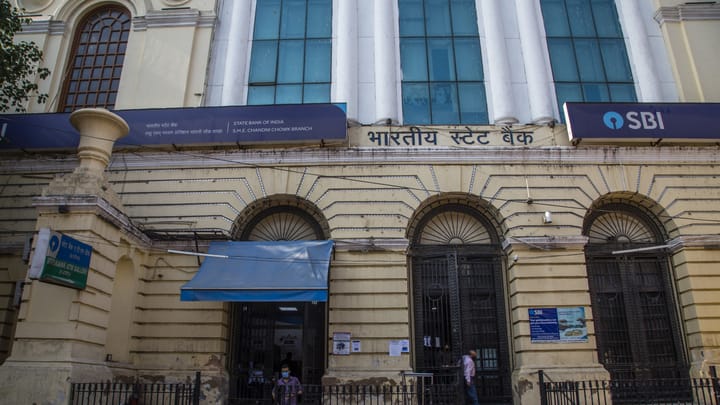
State Bank of India is dealing with a customer PII leak that looks relatively small until you remember how India prices identity. Dark Reading’s point is the part Western playbooks still underweight: a modest dump becomes serious because the underground market is sophisticated. Names, phones, KYC artifacts, and account metadata do not need to be a hundred million rows to be useful. They need to be fresh, joinable, and cheap.
That market is the force multiplier for every anonymous-intake failure. Crime Stoppers data and bank KYC sit in different legal buckets. They travel through the same brokers. Once a record is out, brute-force spraying against internet banking, SIM-swap social engineering, and targeted harassment all get cheaper. Your threat-protection stack will see some of the follow-on noise. It will not put the original rows back in the bottle.
If you operate in India or serve customers there, treat PII volume as a vanity metric. Treat joinability as the risk. A few thousand rows with national ID, mobile number, and branch relationship will out-earn a noisy dump of email hashes. The same math applies to a tips database: fewer records, higher sensitivity, worse blast radius per row. Cyber security programs that score incidents by record count will keep calling these events small until the underground proves otherwise.
Cybersecurity Controls Required Before Anonymous Queues Stay Online
You don’t need a new product to keep a tips form or a KYC upload from becoming next week’s timeline. You need to treat that queue as a production identity store. Security hardening starts with proving who can read it, how long it lives, and what you will do when those answers change.
Do this now, on the systems you actually have:
- Inventory every anonymous or confidential intake path: web forms, shared inboxes, voicemail-to-email, vendor “secure drop” portals, and exports sitting on analyst laptops.
- Lock read access to a named role, log every query and export, and kill shared logins. If volunteers need access, give them time-boxed accounts rather than a group password.
- Encrypt at rest with keys your ticket vendor cannot export, and set a retention clock measured in days for raw tips rather than years.
- Put the freeze decision in writing before you need it: who can halt intake, what banner the public sees, and how emergency reports flow through a second channel you still trust.
Ongoing work is dull on purpose. Rehearse incident response for a confidentiality break, not only for ransomware. Watch for bulk exports, after-hours searches, and new forwarding rules; those are your threat detection signals. Rotate access when staff or contractors leave, and verify the old account is dead. Defense in depth here means a second, out-of-band reporting path so a portal outage does not become a civic blackout. A firewall rule in front of the form is fine. The control that actually matters is the account that runs the form, plus the export path behind it.
If you cannot answer three questions in one meeting, take the queue down yourself: who last exported the table, which fields are joinable to a person in the physical world, and how fast you can stop new submissions. Toronto ended up answering those in public. You would rather answer them in a tabletop.
Meta Penalty Confirms Misleading Access Claims at Platform Scale
Meta just caught the expensive version of the same failure. Users were told one story about who could access their personal information on Facebook. A court ordered a $25 billion penalty after finding those privacy claims misleading. You can argue about the number. The mechanism is the story. The product said access was gated. The record said otherwise.

Privacy copy is an operational document. Every sentence that says “only you,” “anonymous,” or “we do not sell” is a control objective. If engineering cannot show the log, the sentence is a liability. Facebook’s case is the scaled version. Your version is a banner on a form and a retention setting nobody reviewed after the vendor migrated databases.
Crime Stoppers froze a local tips channel. SBI is living with a leak in a market that resells PII for a living. Meta wrote a check that would fund a lot of security teams. All three are custody failures with a public narrative attached. If your privacy policy, your anonymous-tip banner, or your banking terms describe a control you have not tested, that text is part of your attack surface. Regulators read it. Callers believe it. Attackers ignore it.
This is a bad look for any org that markets confidentiality as a feature. The fix is boring and vendor-neutral: map the claim to a control, test the control, and turn the feature off when the control fails. Toronto already demonstrated the last step. Your job is to make sure you never need it, and to have the switch ready anyway.
Sources
- Toronto crime tips org freezes operations after details of data breach come to light
- State Bank of India Suffers a Customer PII Data Leak
- Facebook’s misleading privacy claims land Meta a $25 billion penalty
Take Control of Your Server Security
Don't let brute-force attacks slow you down. Try IPBan Pro risk-free for 30 days.
Secure. Automated. Lightweight.

Take Control of Your Server Security
Don't let brute-force attacks slow you down. Try IPBan Pro risk-free for 30 days.
Secure. Automated. Lightweight.