
Four days. That’s how long a chunk of Britain’s energy infrastructure sat offline after Iran-linked hackers broke into a UK power plant and shut it down. Not a rolling brownout. Not a scheduled maintenance window. Four straight days of a critical facility going dark because someone got in, stayed in, and flipped the switch. If you run infrastructure of any kind, that’s the sentence that should stop you mid-coffee.
This wasn’t a smash-and-grab data theft. It was operational disruption, the kind that used to be theoretical in cybersecurity tabletop exercises and is now just Tuesday. The attack has raised real questions about how resilient Britain’s distributed energy infrastructure actually is, and whether this was a one-off or a proof of concept for something repeatable. Given how the rest of the ransomware and intrusion landscape is trending this year, “repeatable” is the safer bet.
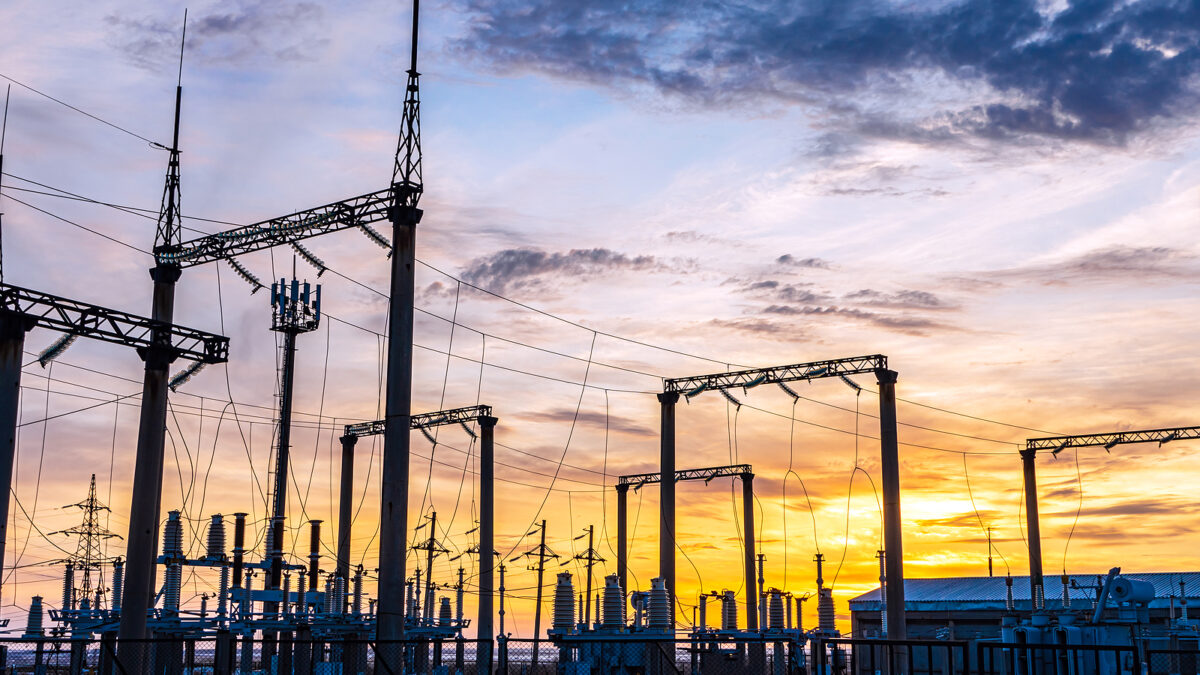
Why a Regional Facility, Not a National Grid Operator
Here’s the part that should actually worry you if you’re not running a headline-grade national utility: the target wasn’t the kind of hardened, heavily monitored national grid operator that gets its own government liaison and quarterly red team engagement. It was a piece of distributed energy infrastructure, the smaller, regional, often under-resourced tier of the power sector that doesn’t get the same attention or budget.
That’s not a coincidence. It’s a pattern showing up everywhere right now. Attackers, whether nation-state or financially motivated, are gravitating toward targets that matter enough to hurt but don’t have the security depth to fight back. Black Kite’s latest ransomware analysis backs this up with hard numbers, and while it’s talking about ransomware rather than OT sabotage, the underlying logic is identical.
Mid-sized companies, those with annual revenue between $10 million and $1 billion, accounted for 73% of publicly disclosed ransomware and data-extortion incidents with known revenue in North America and Europe between January 2023 and June 2026, according to Black Kite. Their share held between 72% and 75% for the entire period.
Read that again. Not a spike. Not a one-quarter anomaly. A steady, three-and-a-half-year trend of attackers deliberately working the middle of the market, where the assets are valuable enough to justify the effort and the defenses are thin enough to make the effort worth it. A regional power facility fits that profile perfectly: high consequence if it fails, low investment in the layered cybersecurity controls that would have made an intrusion harder to pull off and faster to catch.
A Four-Day Outage Means Detection Failed Long Before the Lights Went Out
Nobody shuts a facility down for four days on their first move. That kind of outage is the tail end of an intrusion that had time to breathe, map the environment, and find a way to actually affect operations rather than just sit on a file server. Somewhere in that timeline, there was a window where basic threat detection should have caught movement and didn’t, or did and nobody acted on it fast enough.
This is the uncomfortable truth about OT and energy-sector attacks: the technical exploit rarely matters as much as the surrounding neglect. A brute-force login attempt against a remote access portal, an unpatched jump box, a firewall rule nobody’s reviewed since it was written. Individually boring. Collectively, they’re the reason an intrusion goes from “detected in hours” to “operational for days.”
Fix This Before You’re the Next Case Study
You don’t need to be a national utility to be a target anymore, and you don’t need nation-state-grade defenses to meaningfully raise the cost of an attack. Most of what stops this class of incident is unglamorous and already within reach for a mid-sized operations team.
- Segment OT and IT networks properly, and verify the segmentation actually holds under a real test, not just a diagram that says it does.
- Apply defense in depth to remote access specifically: no single control, VPN, MFA, or firewall rule, should be the only thing standing between the internet and a control system.
- Monitor authentication logs for brute-force patterns against any externally reachable service, and automate the response instead of relying on someone noticing at 2 a.m.
- Build an incident response plan that assumes OT impact, not just data loss, and rehearse it with the operations team, not just IT security.
- Treat security hardening as a recurring maintenance task, not a project you finish once and move on from. Firmware, firewall rules, and access lists all rot if nobody revisits them.
None of that requires a nine-figure security budget. It requires treating cybersecurity as an operational discipline rather than a compliance line item, which is exactly the distinction that separates the facilities that get hit and recover in hours from the ones that go dark for four days.
The uncomfortable reality is that this incident isn’t really about Iran, or this specific plant, or even the energy sector narrowly. It’s about what happens when attackers realize the mid-tier of any industry is where the return on effort is highest. Ransomware crews figured that out years ago and the data proves it. Now it looks like state-linked operators targeting infrastructure are drawing the same conclusion. The organizations that survive this shift won’t be the ones with the biggest name recognition. They’ll be the ones that stopped assuming “we’re not big enough to be a target” was a security strategy.
Sources
- Iran-Linked Hackers Shut Down UK Power Plant for Four Days
- Ransomware attackers are zeroing in on mid-market companies
Take Control of Your Server Security
Don't let brute-force attacks slow you down. Try IPBan Pro risk-free for 30 days.
Secure. Automated. Lightweight.

Take Control of Your Server Security
Don't let brute-force attacks slow you down. Try IPBan Pro risk-free for 30 days.
Secure. Automated. Lightweight.