
You will hear that an apparent hack of an FBI-run national criminal justice database is a Beltway problem, and that naming Kirsten Davies National Cyber Director means someone in the White House finally owns the mess. Both takes are comfortable. Both fail you on Monday morning. If your CAD, RMS, or warrant desk consumes FBI records, that database already sits inside your cybersecurity boundary. A new title in the Executive Office does not change a cached hit, a printer tray, or a dispatcher who treated a federal return as gospel.
Your Cybersecurity Already Trusts a Database You Don’t Run
The FBI is investigating an apparent compromise of a key national criminal justice database it maintains. That sentence is easy to file under “not my agency.” It is a bad filing. Local and state shops query those records all day: wants, warrants, stolen property, protection orders, identity hits that move a traffic stop into a felony arrest. Your officers do not think of that lookup as a third-party API. They think of it as the truth.
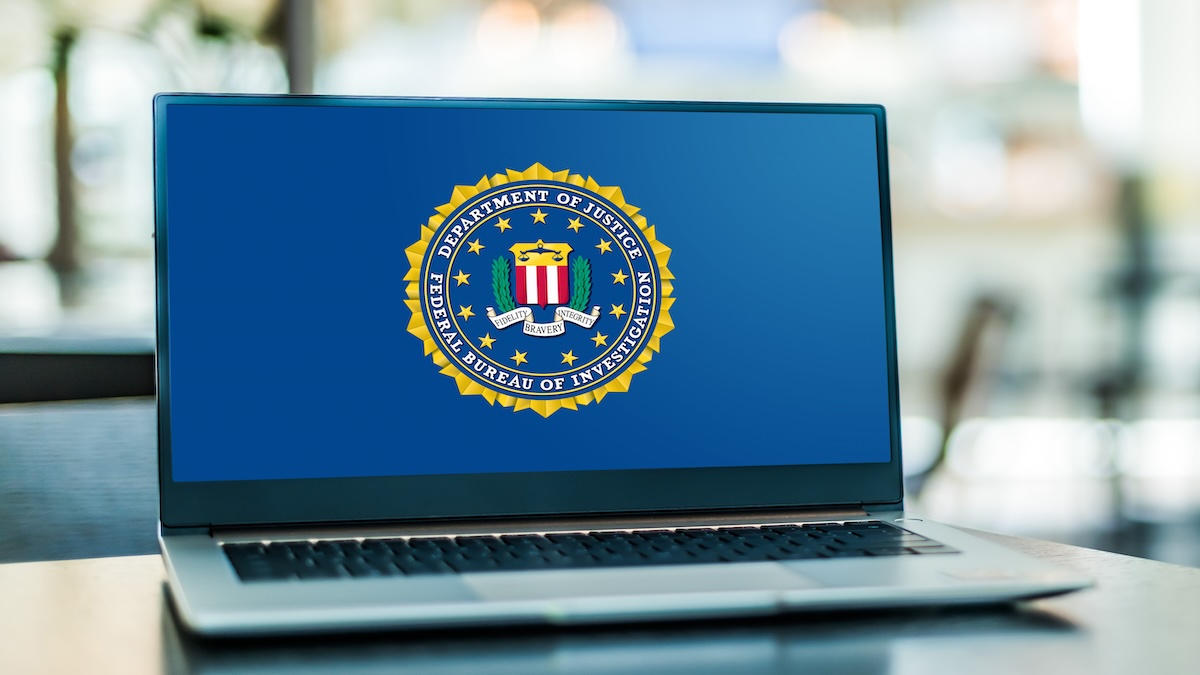
Once you admit that, the architecture looks different. You have query terminals, CJIS-connected jump hosts, middleware that normalizes returns into your RMS, mobile clients in cars, and printers that spit certified copies nobody will re-verify. Attackers who want to wreck a city do not always need your Active Directory. They need the record your staff is trained to obey. Integrity failures travel farther than malware because they ride trusted workflows.
This is a bad look for any agency that sells itself as the gold-standard custodian of criminal history. For you, the reputational hit is secondary. The operational hit is a data source you cannot patch, cannot snapshot on demand, and cannot take offline without breaking dispatch. Treat that dependency the way you treat a payment processor or an identity provider: in scope for cyber security, owned by a named person, and assumed hostile when the vendor is investigating itself.
People still point at the perimeter. Your firewall can be clean, your VPN MFA can be green, and a bad record can still arrive over an allowed justice circuit. Threat-protection tools that only look for payloads will shrug. The packet was authorized. The TLS was fine. The lie was in the row.
A White House Hire Will Not Read Your Query Logs
Same news cycle, different press release. President Trump tapped Kirsten Davies as National Cyber Director, with the White House framing her as a battle-tested leader who will drive an America First cyber strategy. Fine. Directors set strategy memos. They do not sit in your SOC and they do not tell you whether last night’s NCIC-class lookup was replayed from cache after the upstream went sideways.
The timing is the tell. Washington can announce a coordinator while a crown-jewel law enforcement database is under investigation, and a lot of IT leadership will treat the appointment as the story. Strategy docs do not close brute-force attempts against your CJIS jump box. They do not rotate service accounts that have been sitting in a scheduled task since 2019. They do not decide whether your agency keeps serving last-known-good warrant data if the federal feed is untrusted for 72 hours.
You already know how this plays in a real incident response. Leadership asks if “the FBI thing” affects us. The honest answer is: only if we query it, cache it, print it, or let it drive an arrest decision. That is almost every law enforcement and many courts, jails, and fusion-center partners. Corporate shops are not off the hook either. Background-check vendors, badging contractors, and anyone who built a workflow on “the government already vetted this person” inherited the same trust.
Threat detection for this event is boring on purpose. Look for burst query volume, impossible-travel logins on justice workstations, new printers or file shares receiving exports, and operators dumping bulk returns to USB or email. Hunt the seams. The federal investigation will take however long it takes. Your dwell time is the hours between “we heard” and “we checked our own path.”
Assume the Record Can Lie, Then Prove It Can’t
You cannot patch the FBI’s database. You can stop pretending an upstream investigation is a spectator sport. Security hardening here is about your query path, your people, and the decisions you refuse to automate off a single hit.
Do this in order, this week, with names on the tickets:
- Inventory every system, script, vendor portal, and human workflow that queries, caches, prints, or stores FBI-maintained criminal justice data. Include the laptop in the records room and the CAD plugin nobody submitted for review. If you cannot name the owner, you do not control the risk.
- Turn those paths into monitored identity. Unique accounts, MFA, no shared “NCIC” passwords on a sticky note, and alerts on brute-force or spray against the concentrator that fronts the circuit. Disable stale service accounts on the same sprint.
- Segment like the data is radioactive. Justice VLANs should not dual-home to guest Wi-Fi, general internet breakout, or the same jump box your helpdesk uses for everything else. Defense in depth means a compromised office PC cannot become a CJIS client by accident.
- Log the question and the answer. Store query user, terminal, time, and a hash or immutable copy of the return for a defined window. If the upstream is later declared unreliable, you need to know which local decisions rode that record.
- Write the degraded-mode runbook before someone asks for it in a hallway. If the feed is untrusted, do you freeze non-emergency queries, require a second source for high-impact hits, or fail closed on new warrants? Pick it, brief dispatch, and tabletop it for thirty minutes.
Your firewall never saw the bad record
Keep the internet-edge box. It is not the control that saves you here. A justice query is often an allowed, encrypted, policy-blessed transaction. Ongoing work is integrity and process: dual-source high-impact hits (local warrant file plus federal return), spot-check cache TTLs so you are not arresting off a week-old copy, and treat bulk exports as incidents until proven otherwise. Revisit vendor access that “just needs CJIS for support.” Support accounts are privileged access. Rotate them when the upstream is in the news, not when the contract renews.
Keep doing the unglamorous loop after this week. Quarterly access reviews on query terminals. Annual (or better) exercises where the inject is “federal records may be attacker-controlled for 48 hours.” Metrics that a CISO can defend: time to list every CJIS client, time to disable a lost query credential, time to tell a chief whether last night’s arrests used the feed. That is threat-protection you actually run. Washington’s org chart is context. It is not a compensating control.
Frequently Asked Questions
- Does an FBI database investigation mean we should stop all justice queries?
- Stopping cold may be worse than a constrained feed if your legal duties require checks. Constrain instead: named users, extra verification on high-impact hits, tighter logging, and a written degraded-mode policy. Fail closed only where your counsel and command staff have already agreed the alternative is an untrusted record driving force.
- How is this different from a normal vendor incident?
- You cannot put the FBI in your ISA and you cannot demand a SOC 2 screenshot. You still owe your own inventory, segmentation, and decision logging. Incident response starts at the systems you operate, including caches and printouts, even when the compromised system is federal.
- Will a National Cyber Director change what my team does this quarter?
- Strategy at that level can eventually shift grants, mandates, and information-sharing. It will not inventory your terminals or prove a warrant hit is genuine. Budget the quarter around query-path hardening and detection, and treat Beltway staffing as background, not a milestone.
Sources
- FBI Investigating Apparent Hack of Its Key National Criminal Justice Database, AP Source Says
- President Trump Taps Kirsten Davies as National Cyber Director
Take Control of Your Server Security
Don't let brute-force attacks slow you down. Try IPBan Pro risk-free for 30 days.
Secure. Automated. Lightweight.

Take Control of Your Server Security
Don't let brute-force attacks slow you down. Try IPBan Pro risk-free for 30 days.
Secure. Automated. Lightweight.