
Industrial serial-to-IP gateways will often answer a discovery probe with a status field that says whether authentication is enabled. Dark Reading’s reporting this week is blunt: those critical OT access devices will tell you, and anyone else, and many of them say they are unprotected. That is a cybersecurity failure you can scan before an attacker does. It arrived the same Monday as a quieter remote-access story. China-aligned Webworm is suspected of modifying SoftEther VPN Bridge to drop detection fingerprints and disguise the implant as network-monitoring software. You now have two remote-access problems with opposite manners. One device class announces the door is open. One implant works hard to look like a tool you already allow.
Gateway Discovery Packets Confirm Unauthenticated Serial Bridges
A serial-to-IP gateway sits between a PLC, meter, drive, or RTU and the rest of your network. It turns RS-232 or RS-485 into TCP the historian, the jump host, or the vendor laptop can reach. Plants buy them because the fieldbus is still serial and the business wants IP. The management plane on a lot of these boxes is where the honesty gets expensive. Discovery services, status pages, and banners will state whether authentication is on. If it isn’t, a scanner on the wrong VLAN just learned the same fact your last audit missed.
You already know default passwords exist. You already know Telnet survives in cabinets that haven’t been opened since the last turnaround. The sharper failure is the box volunteering its auth posture. Nobody has to win a brute-force campaign against a device that says there is no password. Threat-protection that only lights up on failed logons is late by design. The interesting traffic is the probe that got a useful answer without logging in.
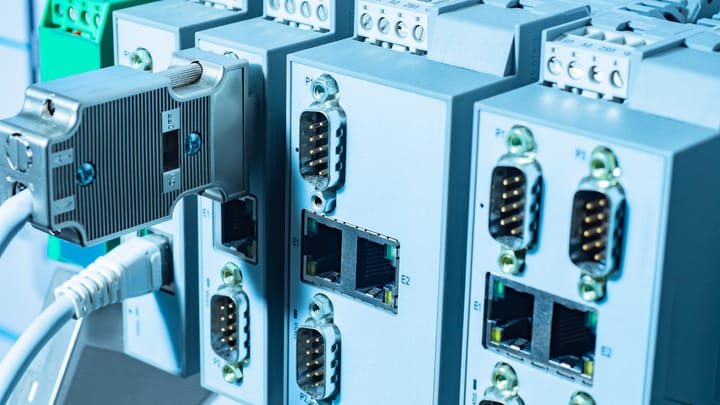
These converters still get treated as furniture. Someone assigns an address during a shutdown, punches a firewall exception for a vendor, and walks away for a decade. The serial tunnel looks like the production protocol you intended. The tiny web UI looks like something nobody bookmarked. Defense in depth on the architecture slide often stops at the cell or area zone. Inside that zone the gateway is trusted because it is boring and because it has been there longer than the current OT engineer.
If you run cyber security for a plant, a pipeline, or a building-management stack, put device servers and protocol converters in the same mental bucket as VPN concentrators. They are remote access. They forward privileged sessions toward equipment that cannot defend itself. An unauthenticated management channel on that path is an unauthenticated path onto the process. Your SIEM parser backlog can wait. This inventory cannot.
Modified SoftEther VPN Bridge Relabeled as Network Monitoring
Webworm’s suspected SoftEther work is the same class of problem with inverted tradecraft. SoftEther VPN Bridge is real, open-source, and used by people who have a legitimate reason to stand up a tunnel. That is the point. Reporting from The Hacker News says the custom variant implements tricks to hide from security tools and presents itself as network-monitoring software. You allow monitoring. You allow vendor VPN. You do not expect the monitoring agent to be the tunnel.
Signature-led threat detection will nod at a renamed service, a cleaned string table, and an install path that looks like a packet collector. Your firewall might already have an outbound allow for the vendor concentrator you think you installed. A covert bridge does not need a new port if it can ride an existing one, and it does not need a noisy beacon if the NOC already trusts the process name. This is a bad look for any program that still equates a quiet EDR console with no remote access.

Once that foothold exists, the conversation leaves the plant cabinet and lands on who can stand up a tunnel from inside. Pair it with unprotected serial gateways and you get a two-step path operators should assume is in scope together. Walk into the converter that announced it was open, or land on IT and hide a VPN under a monitoring label. Either way the attacker is trying to become furniture too. Your change-control culture is part of the attack surface when “network monitoring” is a blanket exception.
Cybersecurity Hardening for Serial Bridges and Covert VPN
You can cut this down without a new platform and without waiting on a vendor advisory that names your exact SKU. Do the loud, reversible work today. Keep the slower ownership work on a calendar someone actually reads.
Immediate actions, in order:
- Build an address list of serial device servers, protocol converters, and serial-over-IP appliances from DHCP, NAC, switch CAM, and the last site survey. From a jump host you control, probe management and the forwarded session. If the box answers unauthenticated, move it off any routed VLAN the same day or drop an ACL that allows only the named engineering workstation.
- Dump processes, services, drivers, and listening sockets on jump hosts, historians, and vendor laptops. Look for SoftEther, unexpected TAP or virtual adapters, and “monitoring” binaries that phone home. Hash them. An unticketed collector is an incident response event, not a documentation ticket.
- Review firewall rules that permit inbound paths to converter management and outbound paths from OT or “monitoring” subnets to the internet. Covert SoftEther needs a way out. Unauthenticated gateways need a way in. Close both until a named owner defends the exception in writing.
- Hunt brute-force against the management interfaces that do require passwords. Repeated failures still matter. Automatic IP bans help on the IT edge. They do nothing for a gateway that never asked for a password. Split those two populations in your runbooks so the SOC stops applying the wrong control to the wrong box.
Ongoing security hardening is dull on purpose. Put serial gateways in the same privileged-access inventory as domain controllers and VPN concentrators. Require authentication on management and on the forwarded serial session. Disable discovery broadcasts that can leave the engineering VLAN. Kill Telnet where the vendor still supports anything better, and replace the box where they don’t. Pin allowed monitoring software by hash and publisher. Recertify every vendor tunnel every quarter. Alert on new listeners and new virtual NICs. Defense in depth here is authenticated management, no internet path, and a human who owns the exception.
Incident Response Still Opens on Failed Logons
Most incident response playbooks still open with failed logons and malware detonations. Unauthenticated gateways never generate a failed logon. A relabeled SoftEther bridge may never generate a malware detonation. The first useful artifacts are inventory diffs, new listeners, unexpected virtual adapters, and discovery traffic that should not cross a zone boundary. If your SOC cannot show “new serial device server appeared” or “new TAP adapter named like a sniffer,” you are flying on hope dressed up as telemetry.
Give someone an owner for protocol converters. Give someone an owner for approved remote-access tools. When either list changes without a ticket, treat it as a suspected incident. Do not park it on a documentation backlog that gets groomed after the outage. Scanners can already see the first class of failure. Your EDR might miss the second. Assume both are in the environment until the inventory, not the dashboard, says otherwise.
The real problem here is remote access you stopped seeing because it looked like plant infrastructure or like telemetry. That is an operations failure you can fix this week. Start with the boxes that will tell a stranger they have no password. Then go find the monitoring agent that should not own a tunnel.
Sources
- Industrial Serial Gateways Broadcast That They’re Insecure
- Webworm Suspected of Modifying SoftEther VPN to Evade Detection and Hide Remote Access
Take Control of Your Server Security
Don't let brute-force attacks slow you down. Try IPBan Pro risk-free for 30 days.
Secure. Automated. Lightweight.

Take Control of Your Server Security
Don't let brute-force attacks slow you down. Try IPBan Pro risk-free for 30 days.
Secure. Automated. Lightweight.