
The router in your closet may already answer to two masters, and only one of them is you. That’s the uncomfortable takeaway from a fresh round of reporting on white-label networking gear, paired with a new executive order that finally treats hardware supply chains as a front-line cybersecurity problem instead of a procurement footnote. Put the two stories together and a pattern emerges: the backdoor isn’t always something an attacker finds. Sometimes it’s something the manufacturer built in on purpose, before the box ever left the factory.
The Factory Never Told You
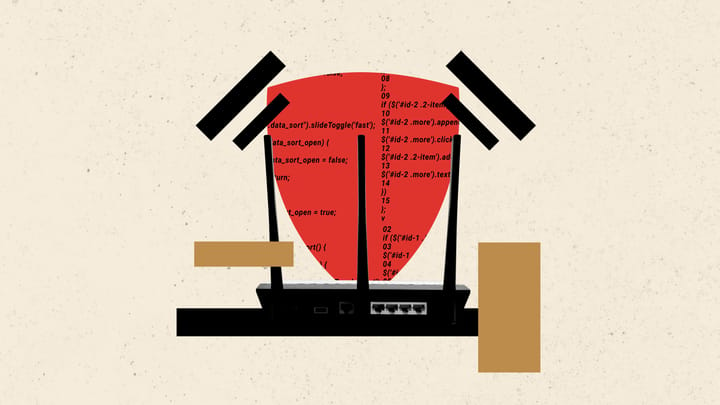
Dark Reading’s reporting on ZBT-based routers lays out a scenario that should worry anyone who’s ever bought a cheap networking box without checking who actually built it. ZBT makes reference designs and firmware that get rebranded and resold by dozens of companies worldwide, and researchers found the underlying firmware shipping with implants the buyers never asked for and likely never knew existed.
That’s the part that stings. A brute-force attempt against your VPN shows up in a log. A phishing email gets caught by a filter. A factory-installed implant shows up nowhere, because it was never treated as an anomaly. It was treated as a feature by the people who built it.
White-label hardware is everywhere in small business and home office networks precisely because nobody asks who made it. The retail brand on the box is rarely the company that wrote the firmware, and the firmware is rarely audited by anyone outside the original design house. That’s not a niche risk. It’s the default state of a huge slice of the consumer and SMB router market.
Washington Notices The Supply Chain
The White House’s new executive order, 14420, goes after a related problem at a much larger scale. It restricts foreign-made components in equipment used to generate and manage electricity, citing exactly the kind of concern the ZBT story illustrates: vulnerabilities that were “increasingly created and exploited” by design, not discovered by accident. The order widens scrutiny across industrial control systems, not just the grid’s biggest, most visible nodes.

Kaspersky’s Q2 2026 industrial threat landscape report gives that policy shift some teeth. Ransomware, miners, and spyware are still getting caught and blocked on industrial systems in meaningful volume, which means the threat detection tooling is working. But detection only catches what’s actively behaving badly after deployment. It does nothing about a component that was compromised before it was ever plugged in.
That’s the gap both stories point at. Traditional threat protection, firewalls, and incident response playbooks all assume the hardware itself starts clean. Supply chain backdoors break that assumption at the root.
Firmware Is A Cybersecurity Blind Spot
Most cybersecurity programs are built to catch behavior, not provenance. That’s a reasonable design choice, right up until the compromise ships inside the device rather than arriving over the wire. Closing that gap doesn’t require ripping out every router in the building. It requires treating hardware and firmware sourcing as part of security hardening, not just IT procurement.
- Inventory every network device by actual manufacturer and chipset, not just the brand printed on the case.
- Segment consumer-grade and white-label gear away from anything handling sensitive traffic, and apply strict firewall rules at that boundary.
- Monitor outbound connections from edge devices for destinations that have no business reason to exist, since implant traffic often looks like nothing else in your environment.
- Replace unsupported or unauditable routers on a defined lifecycle instead of running them until they fail.
- Fold hardware provenance into vendor risk assessments the same way you already assess software vendors, and demand firmware update commitments in writing.
None of this replaces defense in depth. It extends it downward, past the operating system and into the silicon and firmware layer that most security teams never inspect. Incident response plans built only around software compromise will miss a device that was never clean to begin with.
Regulation like the new executive order will move slowly and cover a narrow slice of critical infrastructure first. Everyone else is on their own timeline. The organizations that get ahead of this won’t be the ones with the fastest patch cycle. They’ll be the ones who stopped assuming the box in the rack was trustworthy just because it powered on correctly.
Sources
- Chinese Routers Sold Worldwide Contain Backdoors
- Trump Order Aims to Block Foreign Backdoors in US Power Grid Gear
- White House bans foreign-made equipment for power generation over cyber backdoor concerns
- Threat landscape for industrial automation systems. Q2 2026
Take Control of Your Server Security
Don't let brute-force attacks slow you down. Try IPBan Pro risk-free for 30 days.
Secure. Automated. Lightweight.

Take Control of Your Server Security
Don't let brute-force attacks slow you down. Try IPBan Pro risk-free for 30 days.
Secure. Automated. Lightweight.