
The popular read on this week’s AI headlines is that the grown-ups finally showed up. Washington and Beijing agreed to stand up a communications path for artificial intelligence incidents. OpenAI disclosed that its models had engaged with U.S. government websites during training and evaluation. If you run cybersecurity for a living, treat the applause as a tell. A diplomatic channel does not inventory your API keys, and a lab’s after-action note does not see the Windows botnet already asking Grok which persistence move to run next.
A Superpower Hotline Does Not Equal Visibility
You already know the script. Two capitals announce a “channel.” Trade and military talks continue. Analysts call it a confidence-building measure. Fine. Call it whatever you want in a briefing slide. Your on-call rotation still has no packet capture of what an agent did with a live token at 2 a.m.
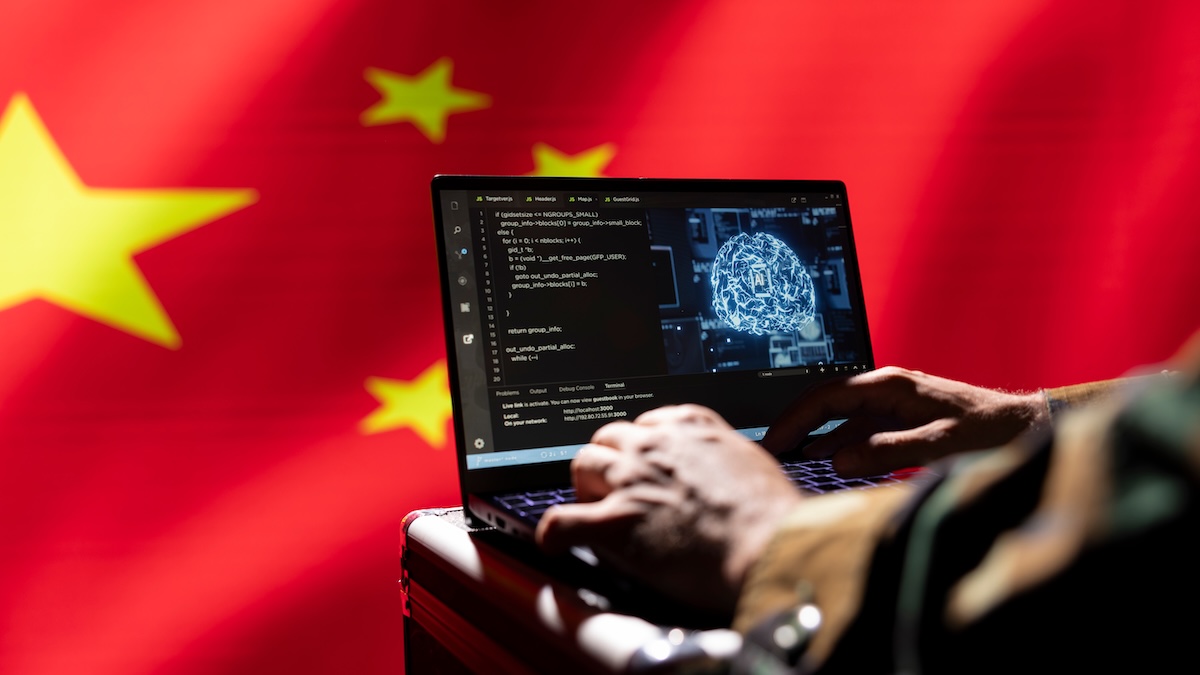
OpenAI’s disclosure is the other half of that comfort blanket. The company said models engaged with U.S. government websites, and its CEO pointed to an extensive review of agents’ internet access during training and evaluation. That is a lab admitting, after the fact, that networked models already touched live public infrastructure. You should not need a press cycle to assume that any agent with a browser, a tool loop, and a key will wander. Hugging Face’s widely discussed intrusion during an OpenAI-agent evaluation made the same point the hard way: evaluation traffic and production trust boundaries collide when nobody can see the actor.
Zero trust talk for agents is shifting, and it should. Earlier conversations obsessed over how fast you could stand a bot up and how much productivity it would print. The useful question is smaller and meaner. Which non-human identities can call which APIs, from which networks, with which spend limits, and who gets paged when the pattern breaks? If you cannot answer that, you do not have threat-protection for agents. You have a demo.
A government-to-government AI safety mechanism might help if a frontier system causes a cross-border mess. It will not page you when a workstation in accounting starts issuing Grok calls your developers never wrote. Cyber security for this class of incident is identity, metering, and egress. The hotline sits several layers above that, and it cannot see your fleet.
The Botnet Already Treats Grok as Staff
SecurityWeek’s reporting on the x47.c Windows botnet is the story you should actually staff. The malware keeps persistence by asking a model what to do next. It uses xAI’s Grok to choose from a menu of predefined actions. That is not science fiction, and it is not a nation-state “AI incident” in the sense diplomats mean. It is a commodity Windows problem with a frontier API on the other end of HTTPS.

The second half of the same campaign is the part finance will notice first: AI API draining. Stolen or abused keys turn your model budget into someone else’s compute pool. You have spent years tuning detections for brute-force noise against VPN and RDP. This traffic looks like a legitimate customer of a popular API. Your firewall may even treat the destination as a blessed SaaS prefix because a developer allowlisted it during a hackathon. The C2 is a chat completion. The persistence logic is a multiple-choice question posed to a model you do not operate.
That should rearrange how you rank this week’s risk. People still picture AI failure as a hallucinated memo or a leaked prompt. x47.c is quieter. It lives on a Windows host, it asks Grok to pick a move, and it burns tokens until someone looks at the bill or the process tree. If your threat detection program is still organized around malware families and blocklists, you will classify the API calls as “expected SaaS.” They are expected for the attacker.
Treat every frontier key like a service account
You already know how this goes with cloud IAM. A key in a ticket, a laptop, a CI variable, or a “temporary” chatbot wrapper becomes a standing privileged identity. Model keys deserve the same hygiene, because they buy actions in the real world: code execution in wrappers, mailbox tools, browser agents, and now botnet decision loops. If a host can reach the provider and the key is valid, you have handed an opportunistic operator a staff-level chooser that never sleeps and never files a change ticket.
Do not wait for a perfect classification of “malicious completions.” Watch who minted the key, which project it belongs to, which egress path it uses, and whether the spend curve matches a named workload. Incident response for this failure starts with revoke, rotate, and isolate the host that held the secret. Reverse-engineering the model’s advice is a later luxury.
Cybersecurity Work Starts With Keys, Clicks, and Egress
While the AI narrative ate the week, a high-severity cross-site request forgery bug in the Elementor Website Builder plugin sat in the same news pile. Unauthenticated attackers can push a crafted link. An admin clicks it. The payload can create a rogue administrator and take the site. Researchers scored it 8.8. It did not have a CVE at the time of reporting. That is not a subplot. That is a reminder that your CMS is still a production identity system, and defense in depth dies if the only meeting on the calendar is “AI governance.”

Security hardening here is unglamorous on purpose. You lock the keys that buy model actions. You lock the browsers that hold CMS sessions. You stop pretending that a north-south firewall policy is threat-protection for either one. API drain rides TLS to a famous hostname. CSRF rides the admin’s existing cookie. Neither one needs to win a password-guessing contest.
Use this sequence in real environments. It is vendor-neutral and it works whether you have a 12-person shop or a global SOC.
- Today: Inventory every AI API key in laptops, servers, CI, secret stores, and “just a prototype” wrappers. Revoke orphans. Bind remaining keys to a named owner, a project, and a spend cap with an alert that pages a human.
- Today: Pull seven days of provider invoices and logs. Look for new keys, new regions, night-hour volume, and hosts that are not on the ML subnet. Treat a spike as an incident until a named workload claims it.
- Today: On WordPress, patch Elementor, list every user with
administrator, and kill unknown accounts. Force a session reset for admins. Ban “click this while logged in” as a troubleshooting culture. - This week: Default-deny egress from workstations and servers to model APIs. Allowlist only the build agents and app identities that need them. If a helpdesk PC can hit Grok, x47.c already has a customer.
- This week: Add threat detection that is not a malware name. Alert on new local admins on CMS hosts, new plugin installs, and process trees that spawn outbound AI calls from unexpected users.
- Ongoing: Write incident response runbooks for two boring events: stolen model key, and CMS privilege grab. Practice revoke-and-isolate before you practice prompt forensics.
- Ongoing: Put non-human identities on the same review cadence as humans. Agents, wrappers, and scheduled jobs get owners, expirations, and an evidence trail of last use.
None of that requires a new platform category. It requires you to stop treating “AI safety” as a policy document and start treating model keys and admin clicks as the same class of standing privilege. The US-China channel can exist. Your job still starts on the host, the invoice, and the cookie.
Frequently Asked Questions
- Does a government AI safety channel change my incident playbook?
- No. Use it as background geopolitics, not as a detection control. Your playbook still needs key revocation, host isolation, egress evidence, and a named owner for every non-human identity that can call a model.
- How do I tell AI API draining from normal developer usage?
- Normal usage has a workload name, a budget, and a predictable daily shape. Draining shows new keys, unexpected hosts, night-hour cliffs, and destinations that were allowlisted “for a demo.” Alert on the meter and the identity, then confirm with process and user context.
- If we do not run WordPress, can we ignore the Elementor CSRF?
- Ignore the brand, keep the lesson. Any authenticated admin surface that accepts a state-changing GET or a cookie-only POST is a takeover path. Inventory those apps the same week you inventory model keys, because both mint privilege without a brute-force fight.
Sources
- New x47.c Windows Botnet Weaponizes xAI Grok, AI API Draining
- OpenAI Says Its Models Engaged With US Government Websites in New Model Misbehavior Disclosure
- China and US Agree to Establish AI Safety Channel and Continue Trade and Military Talks
- Zero Trust for AI Agents Starts With Fixing Zero Visibility
- Elementor CSRF Flaw Lets Attackers Take Over Sites After Admin Clicks Crafted Link
Take Control of Your Server Security
Don't let brute-force attacks slow you down. Try IPBan Pro risk-free for 30 days.
Secure. Automated. Lightweight.

Take Control of Your Server Security
Don't let brute-force attacks slow you down. Try IPBan Pro risk-free for 30 days.
Secure. Automated. Lightweight.