
I have enough from the briefs to write a case-study piece on the StreamRat ad campaign, without retreading the recent Pegasus, phishing-token, or fake-IT-worker stories.TITLE: The Free Stream Exposed 570,000 Phones
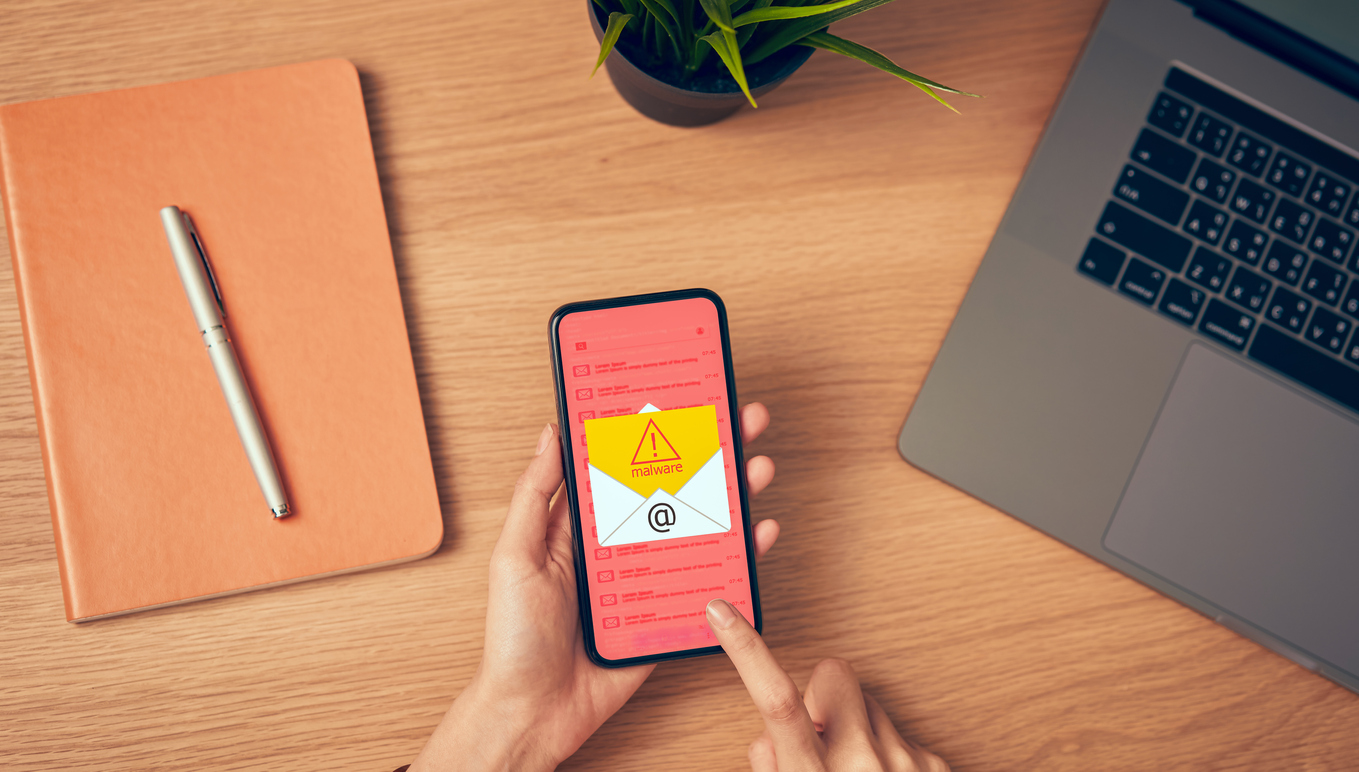
Someone scrolling TikTok on the train saw a clean promo for free movies. No credit card. No wait. They tapped through, because that is what those ads are built to make you do. Malwarebytes researchers say that campaign, running on Meta and TikTok, put StreamRat in front of roughly 570,000 people. StreamRat is a banking Trojan that can take control of an infected phone. If your cybersecurity program still treats social ads as a marketing problem, you missed the delivery channel.
They bought reach on Meta and TikTok and let the victim complete the install. The payload rode a trusted surface your firewall never inspects, because the click happened on a personal device, inside an app your users already keep open all day. Your brute-force dashboards will look quiet while this runs.
Play Was the Install Button
The lure was a free streaming service. That pitch is a product category people already want, wrapped in the same creative language every legit app uses to acquire users. StreamRat had to look convenient. Convenience is how you get hundreds of thousands of impressions to convert.
Android banking Trojans earn their keep after install. They go after Accessibility abuse, overlay screens that sit on top of real banking apps, SMS interception for one-time codes, and remote control of the session the user thinks they are having with their bank. A phone that answers to someone else is a credential harvester that walks through every app the user already unlocked.
Your MDM profile, if you have one, often stops at corporate apps and a passcode policy. Consumer TikTok and Instagram sit outside that bubble on purpose. That is how BYOD was sold to the business. It is also how a paid ad becomes an ingress path you will not see in proxy logs. The install never crossed your secure web gateway. Threat detection that lives on the laptop never got a vote.
Play Store review is not a control when the user never visits Play. Sideloading through a landing page or a download button inside an ad is an old path. Ad networks are supposed to catch it. They miss, repeatedly. This is a bad look for Meta and TikTok. You should plan as if their enforcement will fail again next quarter.
Your Users Already Clicked Allow
Look at the rest of this week’s noise and you see the same shape on the desktop. The Hacker News ThreatsDay roundup is stuffed with CEO phishing kits, about 5,000 Dropbox accounts hit, and OAuth traps that ask for a single Allow. The recap’s own line is the one you should tape to the SOC wall. The worst part is how normal these attacks look. A call from IT. A shared file. A trusted app. A simple request to click Allow.

Fake login pages still convert. One wrong letter in a web address still converts. Old account recovery links still convert. Software guides that point to an unsafe download still convert. None of this is elite tradecraft. It is conversion-rate optimization applied to cyber security. The attacker iterates the landing page the same way your growth team iterates a signup flow.
OAuth consent is the desktop twin of the streaming ad. Users are trained to click through permission screens so work can start. Dropbox shares look like collaboration. CEO kits look like urgency from the top. Your awareness poster told people to hover links. It rarely told them that a legitimate-looking Allow on a real consent screen can hand over mail and files without a password prompt that feels like a break-in.
Cybersecurity Still Treats Ads as Out of Scope
The real problem here is scope. Most programs draw a bright line around managed laptops, the IdP, and the email gateway. Paid ads, consumer app stores, and personal Android sit in a bucket labeled user home life. StreamRat just showed you that bucket is on the network the moment the phone holds a work session, a password manager, or an SMS token.
Do this now, this week, without waiting for a vendor feature.
- Inventory which staff use unmanaged Android for anything that touches work mail, SSO, or vendor portals that accept SMS codes. If you cannot name those people, you cannot contain them.
- On managed devices, block unknown sources, enforce an app allowlist, and turn sideloading off. Work traffic belongs in a managed browser or workspace container, not in the same profile that runs TikTok.
- Hunt phones for newly added Accessibility services, device-admin activation, overlay packages, and SMS access they should not need. Treat a dirty phone as a credential incident: revoke sessions, rotate secrets the device could see, and retire SMS as a factor for that identity.
- Pull the OAuth grant list today. Revoke stale third-party apps. Alert on new high-privilege consents. Expire external Dropbox-style share links by default and watch for mass download spikes.
After the spike fades, add ad-driven sideloads to the threat model the same way you already list email attachments. Put DNS filtering and a minimum OS bar on anything that can open work. Tabletop a phone-as-foothold incident so the helpdesk is not inventing steps at 2 a.m. Security hardening here is boring on purpose: consent hygiene, device ownership, and token lifetime. That is defense in depth that still works when the ad network’s threat-protection slide deck does not.
Contain the Phone Before You Contain the Account
Incident response in a lot of shops still starts when laptop EDR fires or the IdP flags impossible travel. StreamRat-class malware lives below that line. The first honest signal may be a user whose bank flagged a transfer, a ticket about a phone that feels slow, or an MFA storm from a device you do not manage.
If you cannot wipe, isolate, and prove the handset is clean, revoke tokens first. Rotate every password and refresh token that phone could have seen. Assume SMS-based MFA is burned. Then do the forensics you can actually collect. When the account cannot survive a dirty endpoint, the endpoint is your real identity system, and you just let an advertisement own it.
Sources
- StreamRat Android malware spreads through Meta and TikTok ads
- ThreatsDay: CEO Phishing Kits, 5K Dropbox Account Hacks, OAuth Traps + 17 More Stories
Take Control of Your Server Security
Don't let brute-force attacks slow you down. Try IPBan Pro risk-free for 30 days.
Secure. Automated. Lightweight.

Take Control of Your Server Security
Don't let brute-force attacks slow you down. Try IPBan Pro risk-free for 30 days.
Secure. Automated. Lightweight.